


So, you’ve been captivated by the exhilarating world of roller derby, but as you watch the action unfold on the track, you can’t help but feel a bit lost in the midst of all the chaos. Fear not, fellow derby enthusiast! In this guide, we’ll demystify the derby and break down the key rules and regulations that govern this thrilling sport, so you can cheer on your favorite teams with confidence and clarity.
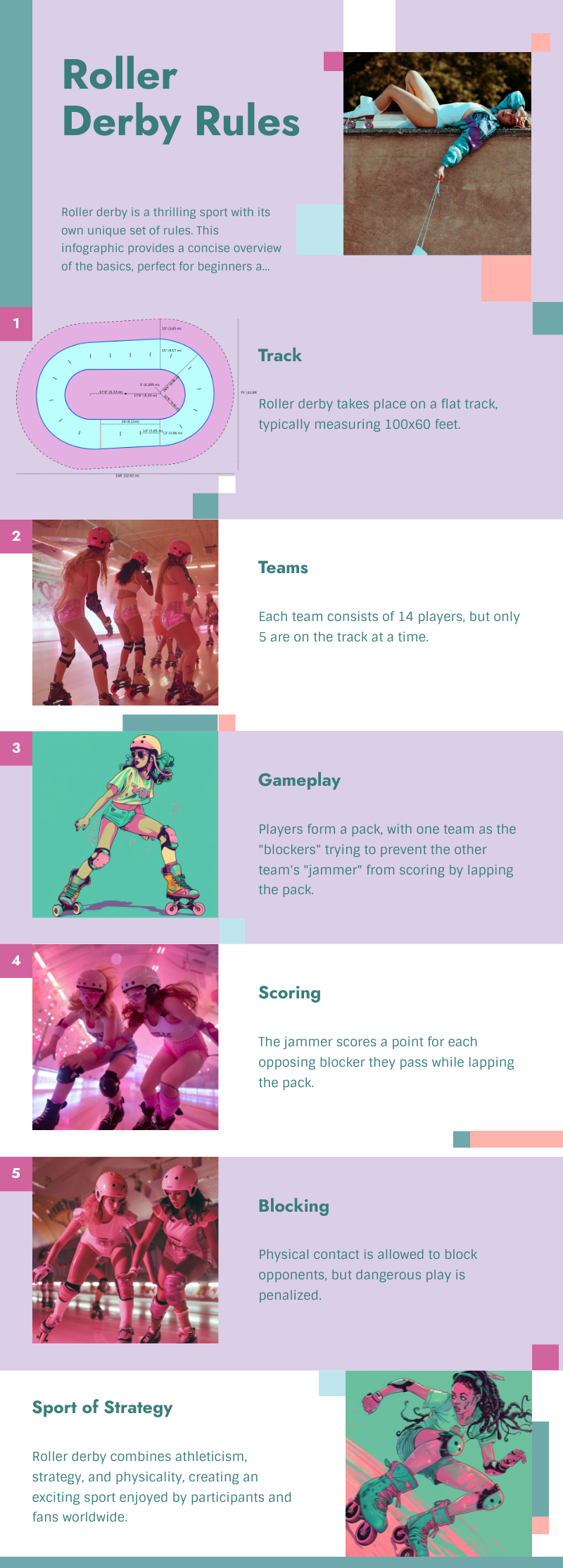
The Basics: Roller derby is a fast-paced, full-contact sport played by two teams of five skaters each, who race around an oval track in a series of high-energy jams. Each team has a jammer, easily identifiable by the star on their helmet cover (panty), whose job is to score points by lapping members of the opposing team. Blockers, on the other hand, work to assist their jammer while simultaneously impeding the progress of the opposing jammer.
Jamming: Jams are the heart of roller derby, lasting up to two minutes each. During a jam, jammers start behind the pack and must navigate their way through a flurry of blockers to score points. They earn a point for each opposing blocker they legally pass, as well as an additional point for lapping the opposing jammer.
Pack Definition: The pack consists of the largest group of blockers from both teams, and its boundaries are defined by the hips of the foremost blockers. This creates a dynamic playing field where strategy and teamwork are key, as blockers work together to create openings for their jammer while simultaneously shutting down the opposing team’s scoring opportunities.
Penalties: Roller derby is a contact sport, but it’s essential for skaters to play within the rules. Penalties occur for illegal contact, blocking out of bounds, cutting the track, and other infractions. Skaters who commit penalties go to the penalty box for a designated amount of time, leaving their team at a numerical disadvantage.
Lead Jammer: The lead jammer is the first jammer to legally pass all blockers from both teams during a jam. This gives them the strategic advantage of being able to call off the jam at any time by placing their hands on their hips, preventing the opposing jammer from scoring additional points.
Strategy: Roller derby is as much a game of strategy as it is athleticism. Teams employ a variety of tactics, including offensive blocking to assist their jammer, defensive blocking to impede the opposing jammer, and strategic formations to control the pace of play and exploit weaknesses in the opposing team’s defense.
Endurance: Roller derby bouts are intense, physically demanding contests that require strength, speed, and endurance. Skaters must be prepared to skate at full throttle for the duration of the bout, navigating tight turns, absorbing hits, and executing precise maneuvers with split-second timing.
Now that you have a basic understanding of the rules of roller derby, you can watch the action unfold on the track with newfound clarity and appreciation for the athleticism and strategy that define this thrilling sport. So, grab your favorite team’s colors, cheer on your derby heroes, and get ready to experience the excitement of roller derby like never before!
xoxo
-S


Awesome content! This is actually the first time I ever had any of this explained. Thanks!
LikeLiked by 1 person