The Missing Passenger Seat

Looking for Katie Ferguson in the Wilds of Wyoming

How She Left
Katie Ferguson was thirty three. She was a daughter, a mother of two, and someone trying to carve out safety. Her stepmom Angela helped her with gas and hotel money so she could leave Alabama and return home to Cody. Family matters. A fresh start. A path forward.

On October 5, 2023, Katie climbed into her black 1999 Dodge Durango. Her two young daughters were in the back seat. Her boyfriend, Adam Aviles Jr., was driving. They were heading northwest to Wyoming.

That evening, in Trumann, Arkansas, a police officer checked on a vehicle parked behind a business. It was Katieโ€™s Durango. The engine was running. The girls were asleep. Katie was awake and calm in the front passenger seat. Adam was standing outside. The officer noted no damage, no danger, and no reason to intervene.

That moment, captured on body cam, is the last confirmed sighting of Katie Ferguson.

How She Disappeared
On October 9, Adam was pulled over in Texas. He was alone.

The Durango now had a bullet hole in the front passenger door. It had been patched with tape. Katie was not in the vehicle. The girls were still with him.

Adam claimed Katie had gotten out of the car in New Mexico and walked away. Left her daughters. Left the trip. Left no message behind.

Her family never believed that version. And neither did investigators.

What Was Found
Nearly a month later, on November 4, Katieโ€™s Durango was found abandoned in Oregon Basin, just south of Cody.

Inside the vehicle was blood. Fired .45 caliber rounds. The entire front passenger seat had been removed. Interior trim pieces had been torn out and stuffed into trash bags. Katieโ€™s phone was wrapped in a blanket. Cadaver dogs alerted on the ground near the passenger side and the tire tracks. The smell inside was strong enough that investigators suspected an attempt to clean or cover it.

A man matching Adamโ€™s description had been seen in the area carrying a red gas can.

The vehicle was left less than ten miles from where Katie lived.

The Pink Tote
During Adamโ€™s federal trial, agents revealed another detail. A pink plastic tote wrapped in white duct tape had been found at his fatherโ€™s house in Cody. An FBI agent testified that it smelled like putrefied blood. Witnesses said Adam had thrown it away behind a Walgreens and then gone back to retrieve it. He reportedly said the tote contained DNA.

It has never been found.

Neither has Katie.

The Charge That Stuck
Adam was a convicted felon. He was not legally allowed to possess firearms or ammunition. Investigators recovered .45 caliber rounds that matched the ammunition used in the vehicle.

He was charged federally for being a felon in possession of ammunition.

At his sentencing in September 2024, the judge stated it was more likely than not that Adam killed Katie. He was sentenced to eighty seven months in federal prison.

No murder charge has ever been filed.

What Weโ€™re Still Looking For
Two pieces of evidence have never been recovered. One is the pink plastic tote. The other is the front passenger seat from the Durango. Investigators believe both were discarded in or near Park County. Possibly near Oregon Basin. Possibly farther out. They may have been burned. They may still be out there.

If Youโ€™re in the Backcountry
If you hunt, hike, ride trails, or explore the wild spaces around Cody, please look again.

A faded tote. A seat frame tucked in brush. Something that seems out of place.

If you find anything that fits, do not touch it. Do not move it. Take a photo. Drop a pin. Call the Park County Sheriffโ€™s Office at 307 527 8700.

Even if youโ€™re not sure. Even if it seems like nothing.

Because it might be the one thing that finally brings Katie home.

A Family Still Waiting
Katieโ€™s daughters were two and four when she disappeared. They are now six and three. They live with Adamโ€™s mother. They ask about their mom. They walk past her room. They are growing up in the space she left behind.

Her mother Mona says she prays for answers every day. Her biggest fear is never being able to explain the truth to her granddaughters. She just wants to bring her daughter home.

At Adamโ€™s sentencing, Katieโ€™s friends wore shirts with her face printed across the front. They wanted him to see her. Every time he looked up.

Katie has not been forgotten.

This Case Is Not Cold
There is no mystery in this case. There is testimony. There is blood. There are bullets. There is a missing seat and a tote that was never meant to be found.

Katie deserves to come home.

If you live in Wyoming, you know how easily things blend into the landscape. You know how many old logging roads lead to nowhere. You know how a piece of plastic can get buried in snow and sun and sagebrush.

So if you are out there, take one more look. The next thing you notice might be the reason someone finally gets to rest.

Stay curious. Keep looking.

xoxo
-S

As an amateur true crime writer, I strive to provide accurate and well-researched information. However, please be aware that I am not a professional investigator or journalist, and my work is based on available sources and my understanding of the case. There may be inaccuracies or incomplete details in my posts. I encourage readers to seek out additional sources and verify information from official and professional channels. Thank you for your understanding and support.

The Silence in Room 5

Unraveling the 2007 Murder of Anita Knutson

I usually reserve my true crime posts for Thursdays, but this one needed a minute.

With the trial wrapping up on Wednesday and so much emotion surrounding the verdict, I wanted to take a little more time before putting this together. Anitaโ€™s story deserves that.

Also – I really wanted this to get out quickly. So today we are out of order.


The Weekend No One Heard From Her

Anita Knutsonโ€™s phone had stopped ringing. Her texts had gone unanswered.

By Monday morning, June 4, 2007, she hadnโ€™t shown up for her shift at the hotel. She hadnโ€™t called her mom back. She wasnโ€™t answering when her dad, Gordon, tried to reach her.

She was 18. A freshman at Minot State University. Living in a basement apartment on 11th Avenue NW. She worked two jobs. She checked in often. She didnโ€™t disappear.

When Gordon drove to the apartment that morning, he brought the building manager and a maintenance worker with him. The door was locked. Everything was still.

They circled the building to the back. Thatโ€™s when they saw the window screen, torn and thrown into the grass.

Gordon looked through her bedroom window and saw Anita lying on her bed, facedown, with a white bathrobe draped across her back.

She looked like she was sleeping. He reached through the window to wake her up.

Her body was cold.

What Was Missing, and What Wasn’t

Anita had been stabbed twice in the chest.

There were no defensive wounds. No struggle. No sign that she had tried to run. The apartment wasnโ€™t ransacked. Her wallet and cash were still there. Her phone was still plugged in. The only thing missing was her pink iPod.

Whoever had killed her hadnโ€™t broken in. Investigators determined the screen had been cut from the inside. The scene had been staged.

And the only person who shared the apartment with her, the only other person with a key, was nowhere to be found.

The Roommate

Nineteen-year-old Nichole Rice told police sheโ€™d spent the weekend at her parentsโ€™ farm. She wasnโ€™t home when Anita was killed, she said. She didnโ€™t know anything about it.

But her story shifted. She gave different accounts about how sheโ€™d found out. At one point she said she heard it from the news. Then from her boyfriend. Then a mutual friend.

She didnโ€™t seem upset, investigators said. Not shocked. Not confused.

And she already knew about the missing iPod, a detail that had never been released.

Trouble in the Apartment

The girls hadnโ€™t been close. Anita had complained to friends that there was tension. Disagreements about chores, about space, about a boy. Small things, but things that had made her uncomfortable. Her friends and coworkers said she was trying to stick it out, hoping things would settle with time.

Nichole wasnโ€™t arrested. There were no fingerprints. No murder weapon. No security footage.

Anitaโ€™s funeral came and went. And the case, like so many others, quietly went cold.

A Second Funeral

It would take less than two years for the Knutson family to bury their second child.

Anitaโ€™s younger brother, Daniel, was just sixteen when she died. The grief hit him hard. He became quiet. Then withdrawn. He was close to his sister. She had been his person. And when she was taken, something in him unraveled.

Eighteen months after Anitaโ€™s murder, Daniel died by suicide.

There is no way to say that without it sitting heavy in your chest. No way to describe the kind of silence that follows two funerals, two lives lost, and no one held accountable.

The Confessions

In 2008, a man named William May told investigators that Nichole Rice had confessed to him the year before. They had been drinking. He said she told him she had killed her roommate. That it had been eating her alive.

Another woman came forward and said Rice had confessed again. This time in frustration. People were gossiping. She was tired of the rumors. She blurted it out. โ€œI did it,โ€ she said. โ€œI killed her.โ€

Both reports were made. Neither was followed up at the time in a way that changed the course of the investigation.

Nichole Rice went on with her life. She got married. Took a government job. Stayed in Minot.

And Anitaโ€™s room stayed empty.

An Arrest at Last

In 2022, the case was reopened with help from Cold Justice. A cold case detective revisited the timeline, the witness statements, and the missed opportunities. That March, police arrested Nichole Rice and charged her with the murder of Anita Knutson.

At the time of her arrest, she was working on base at Minot Air Force as an administrative assistant.

She was taken into custody quietly, fifteen years after Anita was found facedown in her bed.

The Trial

The trial didnโ€™t begin until March 2025. The venue was moved to Grand Forks due to pretrial publicity.

The prosecution laid out a timeline that had never made sense. They presented the confessions. The inconsistencies. The missing iPod. They pointed out how the window screen had been cut from the inside. They told the jury what Anitaโ€™s family had known in their bones since 2007.

The defense argued that the case was built on memory and emotion. That there was no forensic evidence tying Rice to the scene. That she had simply been young, confused, and gossiped about.

After five and a half hours of deliberation, the jury returned a verdict.

Not guilty.

The Silence After the Verdict

Nichole Rice walked out of the courtroom.

There are no other suspects. The case is closed. The silence, once again, settles.

And What We’re Left With

There are cases that feel unclear. This has never been one of them.

From the earliest days of the investigation, something in this story stood out. The coldness. The timeline. The changing explanations. The details that shouldnโ€™t have been known. The pieces that didnโ€™t add up.

What the jury decided doesnโ€™t erase what this family has lost. It doesnโ€™t bring back Anita. It doesnโ€™t bring back Daniel. And it doesnโ€™t answer the questions that have quietly lived in this case since the moment Gordon reached through his daughterโ€™s window and realized she was gone.

Itโ€™s not my place to declare guilt. But I can say this. Some verdicts donโ€™t feel like endings.

This one feels like a pause. And a deeply painful one at that.

Because the truth didnโ€™t get to speak that day.

The silence did.

Stay Curious…

xoxo
-S

As an amateur true crime writer, I strive to provide accurate and well-researched information. However, please be aware that I am not a professional investigator or journalist, and my work is based on available sources and my understanding of the case. There may be inaccuracies or incomplete details in my posts. I encourage readers to seek out additional sources and verify information from official and professional channels. Thank you for your understanding and support.

The Shotgun Incident in Sheridan

What It Takes to Leave

Leaving an Abusive Relationship: What Survivors Face After the Escape

Leaving an abusive relationship isnโ€™t just about making a decision. Itโ€™s about surviving everything that comes after.

For many survivors, walking away becomes the most dangerous moment of their lives. The abuser has lost control, and that loss can trigger violence. Years of psychological and emotional manipulation often escalate in a final act of retaliation.

For Alina Gaona, that moment came on October 9, 2024.

That night, her estranged husband, Oscar Gaona, showed up at her home in Sheridan, Wyoming. He was armed. He made threats. As Alina tried to flee, he pulled the trigger.

She survived. She got away and called for help. Law enforcement responded quickly and arrested Gaona shortly afterward.

Even with him in custody, the trauma doesnโ€™t vanish. Survivors of attempted homicide carry physical, emotional, and psychological scars that last long after the event.

Oscar Gaona was charged with two counts of aggravated assault. On February 20, 2025, he entered a guilty plea to one count through a deal that recommended a prison sentence of three to five years. His sentencing is scheduled for May 6, 2025.


Domestic Violence in Wyoming: A Silent Emergency

Domestic violence affects every community, but in Wyoming, survivors face unique and life-threatening challenges. Isolation, limited access to resources, and small-town dynamics can trap victims in dangerous situations.

Rural Isolation Delays Help

Wyoming is the least populated state in the U.S. Long stretches of open land and vast rural areas can make help nearly unreachable. Some survivors live hours from the nearest domestic violence shelter, if one exists at all.

Law enforcement officers often cover hundreds of miles, delaying emergency response times. Family and friends may be scattered across the state, leaving victims without a nearby support system.

In many cases, the only safe option is to leave Wyoming entirely, which can feel impossible without financial resources.

Small Communities Create Big Barriers

In small towns, privacy is hard to come by. Survivors often worry that reporting abuse will lead to judgment or disbelief, especially if the abuser holds a respected position in the community.

Law enforcement may know the abuser personally. Judges and prosecutors sometimes lean toward leniency to avoid upsetting local dynamics. These realities create an environment where victims hesitate to come forward.

Guns and Domestic Abuse Are a Deadly Combination

Wyoming ranks among the highest in gun ownership rates nationwide. While most residents use firearms responsibly, studies show that the presence of a gun increases the risk of homicide in domestic violence cases by 500 percent.

In Alina Gaonaโ€™s case, a firearm was allegedly used in the assault. Incidents like this highlight the deadly consequences survivors face when leaving.


Why Leaving Triggers Danger

Leaving is not always the safest option. Abusers often become most violent when they feel control slipping away.

Control Turns to Rage

Research shows that survivors are at the highest risk of being murdered after they leave. That loss of power can turn into desperation and explosive violence.

Emotional Conditioning Lingers

Abusers donโ€™t start with physical attacks. They begin with charm, manipulation, and subtle control. Over time, victims are conditioned to question themselves. Even when they know they need to leave, breaking that mental hold takes incredible strength.

Financial Dependence Can Trap Survivors

Many abusers isolate their partners financially. They may forbid employment, drain bank accounts, or ruin credit. Starting over often means starting from nothing.

Children Are Used as Leverage

Abusers often use children to maintain control. They may threaten to take custody or use legal systems to harass the survivor through prolonged court battles.

Fear Is Constant

Survivors live with the fear of retaliation. Police reports and restraining orders do not guarantee safety. When someone has already shown a willingness to harm, every step must be planned for survival.


The Legal System Often Falls Short

Oscar Gaonaโ€™s plea deal, recommending three to five years for allegedly shooting at his estranged wife, reflects a broader issue. Outcomes like this are unfortunately common.

Plea bargains are often used in domestic violence cases to avoid retraumatizing the victim or to secure a guaranteed conviction. While this can spare survivors the pain of testifying, it frequently feels like an inadequate response to the trauma inflicted.

A sentence of three to five years may satisfy the court, but the survivor lives with the consequences far longer.


Life After Abuse Requires Support

Leaving is only the first step. Rebuilding takes time, resources, and safety.

Survivors often start over from zero. Some move to new towns, take on new names, and avoid contact with anyone tied to their past. Even then, the emotional weight lingers.

Common Challenges Include:

  • Post-Traumatic Stress and Anxiety
    Panic attacks, hypervigilance, and insomnia often persist.
  • Rebuilding Trust
    Emotional scars can make new relationships and friendships difficult.
  • Legal Entanglements
    Custody battles, stalking, and protection order violations may continue long after separation.

Support Is Available

No one deserves to live in fear. If you or someone you know is experiencing domestic violence, these resources can help:

  • National Domestic Violence Hotline: 800-799-7233 or thehotline.org
  • Wyoming Coalition Against Domestic Violence & Sexual Assault: wyomingdvsa.org
  • SAFE Project (Laramie, WY): 307-742-7273

Survivors deserve more than survival. They deserve peace, justice, and the space to rebuild their lives on their own terms.

xoxo
-S

As an amateur true crime writer, I strive to provide accurate and well-researched information. However, please be aware that I am not a professional investigator or journalist, and my work is based on available sources and my understanding of the case. There may be inaccuracies or incomplete details in my posts. I encourage readers to seek out additional sources and verify information from official and professional channels. Thank you for your understanding and support.

https://cowboystatedaily.com/2024/11/06/wyoming-woman-says-estranged-husband-baited-then-tried-to-kill-her/

Wyomingโ€™s New Missing Person Protocol Law

A Step Forward in the Fight for the Missing

If If youโ€™ve been following this blog for a while, you know how deeply I care about missing persons cases. Iโ€™ve spent countless hours researching, writing, and advocating for those who have vanished, and for the families left behind searching for answers. When I heard that Wyoming passed Senate File 114 (SF 114), a law aimed at standardizing how missing persons cases are handled, I felt something I donโ€™t always get to feel when writing about these cases: hope.

On February 27, 2025, Wyoming took a major step toward improving how it responds to missing persons reports. It might seem like a dry administrative change, but in reality, itโ€™s a lifeline for families who have long been met with confusion and delays when trying to report a loved one missing. In a state known for its vast wilderness and small, spread-out communities, those delays can mean the difference between a safe return and a cold case.

Why This Law Was Needed

For too long, Wyoming lacked a consistent approach to handling missing persons reports. Families trying to file reports often faced unnecessary roadblocks. Some agencies would accept cases right away, while others refused due to outdated policies. Imagine the heartbreak of knowing someone you love is missing and being told that law enforcement wonโ€™t even take the report. That was a painful reality for many families, and this law finally addresses it.

Wyomingโ€™s remote landscape adds even more urgency. When someone disappears, it isnโ€™t always about reviewing camera footage or pinging a phone. Itโ€™s miles of open land, unpredictable weather, and a race against time. Indigenous communities especially have suffered, seeing loved ones go missing with little to no law enforcement response. The need for change has been clear for far too long.

What the New Law Does

Senate File 114 introduces key safeguards to prevent cases from being ignored or delayed:

  • Mandatory Acceptance of Missing Person Reports
    All law enforcement agencies in Wyoming must now accept any credible missing person report. No refusals. No delay.
  • Time-Sensitive Data Entry
    Once a report is filed, agencies must enter the individualโ€™s information into state and national databases within eight hours. This requirement removes the wait and ensures faster coordination.
  • Clear Jurisdiction Guidelines
    The agency responsible for the case is now clearly defined. If the personโ€™s last known location is confirmed, that jurisdiction takes the lead. If not, it defaults to where the individual last lived. This clarity stops cases from getting bounced between agencies.
  • Centralized Case Management
    The Wyoming Division of Criminal Investigation (DCI) will serve as the central hub for all missing persons records. This ensures consistent documentation and easier communication between departments.
  • Ongoing Oversight for Long-Term Cases
    If someone remains missing after 30 days, the case must be compiled into a full investigative file and submitted to the Attorney General and the DCI. This ensures continued oversight and attention.

What This Means for Families and Law Enforcement

For families, this law is life-changing. They no longer have to fight just to open a case. The burden is no longer on them to navigate a flawed system.

For law enforcement, this removes confusion. It outlines clear responsibilities and creates enforceable steps. Officers now have the structure they need to act quickly and consistently, without inter-agency conflict or interpretation.

A Step Toward a Better Future

This law is part of a growing movement to improve how missing persons cases are handled across the country. Some states have already implemented similar changes, but many still lag behind. While this is a victory for Wyoming, it also signals the beginning of what still needs to be done nationwide.

Iโ€™ve covered far too many cases where time was lost due to red tape. Iโ€™ve read accounts from families who begged for help and were turned away. Seeing this law pass gives me hope that momentum is building. Maybe, one day, no family will be left to suffer in silence when someone they love goes missing.

To every advocate, lawmaker, family member, and leader who fought for this legislation, thank you. This win belongs to you. And to every person still waiting for answers, please know that your story matters.

If you or someone you know has struggled to file a missing person report in the past, feel free to share your experience in the comments. Your voice deserves to be heard.

xoxo
-S

The Vanishing of Brandon Swanson

A Night that Haunts Minnesota

In the quiet hours of May 14, 2008, a young man named Brandon Swanson disappeared into the rural Minnesota night, leaving behind a haunting mystery that has kept his family and the small town of Marshall searching for answers ever since. Brandon had just finished his first year at Minnesota West Community and Technical College. That night, he was celebrating with friends, likely looking forward to the next chapter of his life. But in a matter of hours, his future and the certainty of his last moments vanished along with him.

The 911 Call That Set Everything in Motion

Just after 2 a.m., Brandonโ€™s car slid off the gravel road near the town of Lynd, about 10 miles from his home. Stranded but unshaken, he called his parents for help. Annette and Brian Swanson, hearing the stress in their sonโ€™s voice, jumped in their car without hesitation, heading toward where Brandon thought he was. Darkness and the quiet of the countryside added an eerie edge to Brandonโ€™s calm directions as he tried to guide his parents by phone.

What stands out is how collected Brandon was, even after what must have been a jarring moment. He described his surroundings, pointing out the faint glow of what he thought were the lights of a nearby town. Annette and Brian were on the line with him for over 40 minutes, but as they neared where Brandon should have been, they saw no car. Suddenly, a short gasp interrupted Brandonโ€™s calm instructions, followed by dead silence. The call dropped, and with it, any trace of Brandon.

A Search That Uncovered Only More Mystery

The following day, an exhaustive search began. But as volunteers and authorities combed the area, it became clear that things werenโ€™t adding up. When they eventually located Brandonโ€™s car, it was in Taunton, nearly 25 miles away from where heโ€™d said he was. How could Brandon have been so certain about his location but be so far off?

Sniffer dogs managed to trace his scent to the Yellow Medicine River. For a time, the working theory was that he had wandered, disoriented, and accidentally fallen into the river. But the river was shallow at that time of year, and search divers came up empty-handed. Not a single item, a shoe, his phone, his wallet, was ever found in or near the water. The search expanded, volunteers combed nearby fields and gravel pits, but still, Brandon seemed to have disappeared without a trace.

Theories, Rumors, and a Haunting Legacy of Questions

In the absence of evidence, theories about what happened to Brandon that night have multiplied. The most common is that he fell into the river and drowned, his body carried away by the current. Others believe he might have been injured and lost his sense of direction, eventually collapsing somewhere too hidden for searchers to see. But the chilling lack of evidence, no personal belongings, no tracks, and no remains, has left many wondering if there might be more to the story.

Thereโ€™s also the deeply unsettling possibility of foul play. Though there was no indication Brandon was involved in any trouble, the notion that someone may have taken advantage of his vulnerable, stranded state lingers in some minds. Another theory considers whether Brandon could have been experiencing personal stress that caused him to wander farther than intended, though his friends and family maintain that Brandon was a stable, reliable person. The only certainty in Brandonโ€™s disappearance seems to be that it remains profoundly unresolved.

Brandonโ€™s Law: A Legacy of Vigilance

For Annette and Brian Swanson, Brandonโ€™s absence has been an unfathomable loss, one they have channeled into action. After enduring delays and setbacks in the initial search efforts, they worked tirelessly to enact Brandonโ€™s Law in Minnesota. Signed in 2009, this law mandates that police take all missing person cases seriously, regardless of the individualโ€™s age or perceived level of risk. It was a critical change, ensuring that families like the Swansons never have to feel as though their missing loved one isnโ€™t worth searching for immediately.

For the Swansons, Brandonโ€™s Law is a way to make sure Brandonโ€™s memory makes an impact, even if he canโ€™t be there to see it. The law serves as a small light in the darkness that has surrounded Brandonโ€™s case, one that may prevent other families from experiencing the same agonizing uncertainties.

A Case that Stays in the Shadows

Over 15 years later, Brandonโ€™s disappearance remains unsolved, a haunting mystery in Minnesotaโ€™s history. His parents, community, and those who follow his story continue to hope for closure. While Brandonโ€™s Law offers a lasting legacy, the answers they seek, the ones that might finally bring them peace, remain just out of reach.

Brandonโ€™s story serves as a reminder of how quickly a life can vanish and how the unknown can linger, even in a place as close-knit and quiet as Marshall, Minnesota. Perhaps one day, a clue will surface, and the shadows that cloud that night in May will part. Until then, Brandonโ€™s disappearance is a story that reminds us all to hold our loved ones close and to always be vigilant for the missing voices that still need to be heard.

Hug your family tonight.
xoxo
-S

As an amateur true crime writer, I strive to provide accurate and well-researched information. However, please be aware that I am not a professional investigator or journalist, and my work is based on available sources and my understanding of the case. There may be inaccuracies or incomplete details in my posts. I encourage readers to seek out additional sources and verify information from official and professional channels. Thank you for your understanding and support.

The Disappearance of Kierra Coles: Six Years Later

This week marks the six-year anniversary of the disappearance of Kierra Coles, a pregnant 26-year-old postal worker from Chicago. On October 2, 2018, Kierra was last seen walking near her apartment, and despite ongoing investigations, she has not been seen since.

Her family, friends, and community continue to seek answers, as the pain of her absence remains as fresh as the day she vanished. Six years later, we reflect not only on Kierraโ€™s life but also on the relentless search for justice and closure.

Timeline of Events Summary

Kierra was last seen on surveillance footage walking past her car on the night of October 2, 2018. The footage shows her in her postal worker uniform, even though she was off duty that day. After this sighting, she vanished without a trace. Her car was later found outside her apartment with her purse, phone, and lunch inside.

The last person to have spoken to Kierra was her boyfriend, with whom she had a somewhat rocky relationship. He was cooperative in the beginning but has since moved out of state, adding to the complexity of the case.

October 2, 2018 โ€“ Kierra Coles was last seen on surveillance footage at around 10:43 PM, walking near her apartment on the South Side of Chicago. The footage shows Kierra dressed in her postal worker uniform, even though she had called in sick that day and was not on duty. This has raised questions about why she was wearing her uniform.

Earlier in the day, Kierra was reportedly seen withdrawing money from an ATM. She seemed calm and went about her business without any sign of distress. Her car was found parked outside her apartment with her personal belongings inside, including her purse, phone, and lunch. The presence of these items suggests she did not plan to be gone for long.

Timeline of Events Breakdown

October 3, 2018 โ€“ Kierraโ€™s family became concerned when she failed to show up for work and didnโ€™t answer calls or messages. Her mother, Karen Phillips, went to Kierraโ€™s apartment to check on her. Finding no sign of Kierra and her car still parked outside, Karen filed a missing persons report with the Chicago Police Department.

October 4-5, 2018 โ€“ Chicago police began investigating Kierraโ€™s disappearance. They checked surveillance footage from Kierraโ€™s neighborhood, which provided the last known sighting of her. Investigators also interviewed friends, family, and Kierraโ€™s boyfriend, who was cooperative at the time but has since moved out of state.

October 11, 2018 โ€“ The United States Postal Service (USPS), Kierraโ€™s employer, offered a reward of $25,000 for information leading to her whereabouts. Kierraโ€™s family also raised additional funds, bringing the total reward to $49,500. Despite the large reward, no solid leads emerged.

November 2018 โ€“ Searches were conducted in several locations around Chicago, including nearby forests and rivers. Kierraโ€™s family organized vigils and canvassed the neighborhood, passing out flyers in hopes of finding new information.

2019-2020 โ€“ As time passed, Kierraโ€™s case gained more media attention, but no significant developments occurred. Investigators have not publicly named any suspects or persons of interest. Kierraโ€™s family, particularly her mother, has remained vocal and persistent in keeping her name in the public eye, holding vigils and using social media to appeal for information.

2021-Present โ€“ While Kierraโ€™s case remains open, there have been no major breakthroughs. Chicago police continue to classify her disappearance as a missing person investigation. Her family continues to search for answers, refusing to give up hope.

Investigation Efforts

Chicago police and Kierraโ€™s family quickly launched searches and public appeals for information. Despite surveillance footage and a few promising leads, Kierraโ€™s case has grown cold. The fact that she was pregnant at the time of her disappearance has only added to the urgency for answers.

The postal service and community members even raised a $49,500 reward for information leading to her whereabouts, but it hasn’t generated any new solid leads.

Theories Surrounding Kierraโ€™s Disappearance

  1. Foul Play by Someone Close
    Many have speculated that Kierraโ€™s disappearance involved foul play, particularly someone she knew. Attention has fallen on her boyfriend, with whom she was reportedly arguing in the days leading up to her disappearance. While no concrete evidence has linked him to her disappearance, the fact that he has since moved away without further cooperation in the case raises questions.
  2. Random Act of Violence
    Chicago has faced its share of violence, and thereโ€™s the theory that Kierra may have fallen victim to a random act. Though the neighborhood where she disappeared wasnโ€™t known for high crime rates, thereโ€™s always the possibility that she was in the wrong place at the wrong time.
  3. Voluntary Disappearance
    A less likely theory is that Kierra disappeared on her own volition. Those who knew her, particularly her family, strongly dismiss this idea, as Kierra had been excited about her pregnancy and looking forward to her future.
  4. Human Trafficking
    Sadly, human trafficking is a theory that often emerges in missing women cases, particularly in major cities like Chicago. While thereโ€™s no direct evidence to support this, it remains one of the darker possibilities that investigators have not completely ruled out.

Impact on Family and Community

Kierraโ€™s family, particularly her mother, has been relentless in keeping her name in the public eye. Theyโ€™ve held vigils, led searches, and continue to push for answers. Kierraโ€™s mother has publicly stated that she knows someone out there knows what happened to her daughter, and she is determined to find out.

Her disappearance has also brought attention to the disproportionately high number of missing Black women and the lack of media coverage in such cases. This has spurred conversations about why cases like Kierraโ€™s donโ€™t receive the same national attention as others.

Current Status

Despite several years passing since her disappearance, the case remains open, and authorities are still seeking information. Kierra Coles has not been forgotten by her family, the Chicago community, or those following her story. Every day without answers is a day her family remains in agony, but they hold onto hope that Kierra will be found and that justice will be served.

Who to Contact

If you have any information about the disappearance of Kierra Coles, please contact the Chicago Police Department at (312) 747-8274 or the U.S. Postal Inspection Service at (877) 876-2455. You can also submit an anonymous tip to Crime Stoppers at (800) 222-TIPS (8477).

xoxo
-S


As an amateur true crime writer, I strive to provide accurate and well-researched information. However, please be aware that I am not a professional investigator or journalist, and my work is based on available sources and my understanding of the case. There may be inaccuracies or incomplete details in my posts. I encourage readers to seek out additional sources and verify information from official and professional channels. Thank you for your understanding and support.

The Lake Bodom Murders: Finlandโ€™s Most Infamous Cold Case

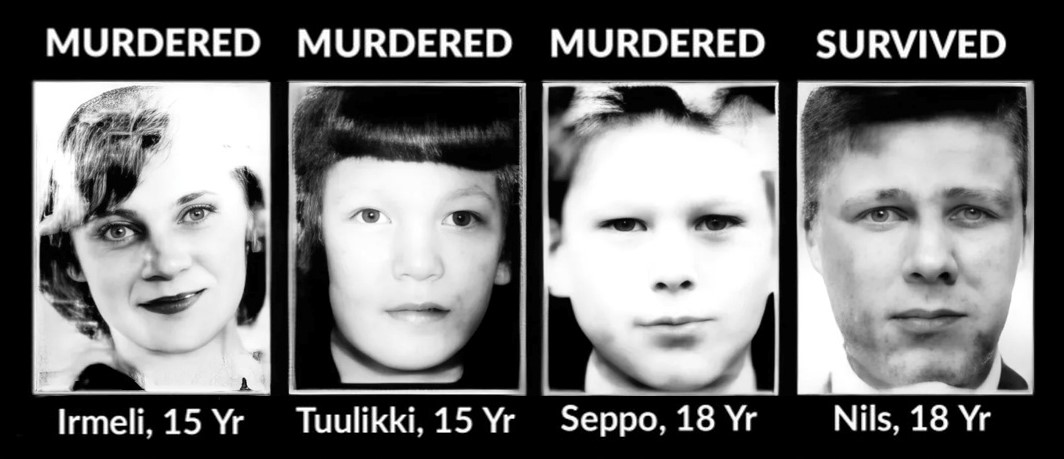
On the night of June 4, 1960, four teenagersโ€”Maila Irmeli Bjรถrklund, Anja Tuulikki Mรคki, Seppo Antero Boisman, and Nils Wilhelm Gustafssonโ€”pitched a tent on the serene shores of Lake Bodom in Finland for what was meant to be an overnight camping trip. But the peaceful night turned into a nightmarish mystery that continues to haunt the country. By morning, three of the teenagers were dead, their bodies brutally mutilated. The lone survivor, Nils Gustafsson, was found severely injured, and more than six decades later, the mystery of who committed these murders still lingers.

The Gruesome Discovery

On June 5, 1960, a birdwatcher, Esko Oiva Johansson, stumbled upon a chaotic and grisly scene. The teenagersโ€™ tent had been savagely slashed from the outside. Inside were the lifeless bodies of 15-year-old girls Maila and Anja, along with 18-year-old Seppo. All three had been stabbed repeatedly and struck with a blunt object. Blood soaked the tent, and the violence of the attack was staggering. Nils Gustafsson, the only survivor, was found lying outside the tent, unconscious, with a broken jaw, bruises, and a concussion.

Though Nils had survived, his injuries were substantial, leaving him dazed and his recollection fragmented. He would later claim that he could not remember the attack, fueling speculation that his trauma had left him unable to identify the killerโ€”or worse, that he had something to hide.

An Investigation Clouded by Errors

As is tragically common in cases from this era, the investigation into the Lake Bodom murders was riddled with mistakes. Police arrived at the scene and, by modern standards, mishandled crucial evidence. Passersby and curious locals were allowed to wander through the site, potentially contaminating it. Key items, including some of the victimsโ€™ clothing, were missing, and the murder weaponsโ€”a knife and a blunt objectโ€”were never found.

Early in the investigation, Nils Gustafsson was treated more as a victim than a suspect. He was hospitalized for his injuries, and though some of his statements were inconsistent, they were attributed to the trauma of the event. Despite extensive searches and questioning of nearby witnesses, police were unable to come up with a concrete suspect. One witness reported seeing a mysterious blonde man walking away from the campsite around the time of the murders, but this lead never panned out.

A Decades-Old Cold Case Reopened

The case remained cold for over 40 years until, in 2004, Finnish police reopened the investigation. This time, Nils Gustafsson found himself at the center of the inquiryโ€”not as a victim but as the prime suspect. Investigators believed that a violent altercation between Gustafsson and Seppo Boisman had escalated into a full-blown massacre, with Gustafsson allegedly attacking his companions in a fit of jealous rage, possibly fueled by alcohol. The theory was that after killing his friends, Gustafsson staged his own injuries to appear as though he had been a victim, too.

Despite this dramatic accusation, many doubted Gustafsson’s guilt. His injuries were extensive, and it seemed improbable that he could have inflicted such trauma on himself. In 2005, after a high-profile trial, Gustafsson was acquitted due to lack of evidence. Though the trial reignited public interest, it also highlighted the complexities and frustrations of the case, as no new suspects emerged, and the mystery remained unresolved.

Theories Abound

With so little hard evidence, the Lake Bodom murders have spawned a host of theoriesโ€”some more plausible than others. Over the years, investigators, journalists, and amateur sleuths alike have attempted to unravel the truth behind the killings.

  1. The Kiosk Keeper: A local kiosk worker was one of the last people to see the teenagers alive. He had a reputation for being argumentative and was briefly considered a suspect. However, no substantial evidence tied him to the crime, and he was soon dismissed as a serious suspect.
  2. Pentti Soininen: This violent criminal, who was imprisoned at the time of the investigation, reportedly confessed to the murders before his death. However, his confession was inconsistent, and some of the details didnโ€™t align with the facts of the case. Additionally, Soininen had a documented history of mental illness, making it difficult to trust his account.
  3. The German Spy Theory: A particularly compelling theory suggests that a former German soldier, who had been hiding in Finland after World War II, may have been responsible. Itโ€™s believed that this man, living under an assumed identity, was in the vicinity at the time of the murders. Some speculate that he could have been a fugitive or was involved in espionage activities, adding a cloak-and-dagger element to the case. This theory gained traction over the years but ultimately faded as investigators failed to conclusively link him to the crime.
  4. Random Attack by an Unknown Assailant: Others believe the murders were the result of a random act of violence. Some theorize that a mentally unstable individual or a passing killer stumbled upon the campsite and committed the heinous acts without any personal motive. The randomness of the murdersโ€”especially given the isolated location and the brutality of the attackโ€”fuels this theory. However, the killerโ€™s ability to avoid capture for so long also raises questions.

The Legacy of the Lake Bodom Murders

To this day, the Lake Bodom murders loom large in the Finnish national consciousness. The case is more than just an unsolved crimeโ€”itโ€™s a dark, tragic chapter that refuses to close. Over the years, it has inspired countless books, films, and even horror stories, casting a long shadow over Lake Bodom itself. A place once known for its natural beauty is now remembered as the scene of a horrifying, violent act that defied explanation.

For the families of the victims, the lack of closure is devastating. Despite new forensic methods and technology, the Lake Bodom case remains cold, with each passing year making it less likely that the truth will ever be fully uncovered. And yet, the case continues to attract attention from true crime enthusiasts, amateur detectives, and the Finnish public, all hoping that one day, the mystery will finally be solved.

What Do You Think?

Theories about the Lake Bodom murders abound, and the caseโ€™s notoriety has only fueled more speculation. Do you think Nils Gustafsson was the killer, or was he just another victim? Was it a random, unprovoked attack? Or does the German spy theory hold the key to unraveling this mystery?

Share your thoughts in the comments belowโ€”whatโ€™s your theory? If you think youโ€™ve found a clue or angle that others have missed, letโ€™s hear it! After all, this cold case might still have secrets waiting to be uncovered.


This case is quite harrowing. I appreciate your willingness to read these cases and follow along with me as I research and report. Hug your family tonight and take great care the next time you go camping.

xoxo
-S


Sources:

  • Police reports from 1960 and trial documents from Nils Gustafssonโ€™s acquittal in 2005.
  • Finnish news archives and investigative reports from various media outlets.
  • Speculative theories from true crime books and articles surrounding the Lake Bodom murders.

As an amateur true crime writer, I strive to provide accurate and well-researched information. However, please be aware that I am not a professional investigator or journalist, and my work is based on available sources and my understanding of the case. There may be inaccuracies or incomplete details in my posts. I encourage readers to seek out additional sources and verify information from official and professional channels. Thank you for your understanding and support.

The Disappearance of Kelsey Berreth

On November 22, 2018, Kelsey Berreth, a 29-year-old mother from Woodland Park, Colorado, vanished under mysterious circumstances. Kelsey, a flight instructor and devoted mother to her 1-year-old daughter, was reported missing after her family and friends grew concerned when they had not heard from her for several days. Her case quickly gained national attention, and the search for her became a high-profile investigation.

The Last Known Sighting

Kelsey was last seen on November 22, 2018, at a Safeway grocery store in Woodland Park. Surveillance footage from the store captured her entering and leaving the store, seemingly in good spirits. She was seen wearing a white coat and carrying several bags of groceries. After leaving the store, Kelsey was seen driving her black Toyota 4Runner, which was later discovered abandoned near her home.

Her home, located in a quiet neighborhood, was found to be in disarray. The front door was unlocked, and there were signs of a struggle. Her phone was also missing, which made it difficult for investigators to trace her last movements.

Investigative Challenges

The search for Kelsey Berreth was extensive and involved multiple agencies, including the FBI. Despite the thorough search efforts, investigators faced several challenges. The initial investigation was hindered by the lack of concrete evidence and reliable witnesses. Surveillance footage and witness accounts did not provide clear leads.

In a significant development, Kelseyโ€™s fiancรฉ, Patrick Frazee, was arrested in December 2018. He was charged with multiple counts related to Kelseyโ€™s disappearance, including first-degree murder. The case took a dramatic turn when Frazeeโ€™s former employee, Krystal Lee Kenney, came forward with information about the case. Kenney’s testimony played a crucial role in uncovering details about Kelseyโ€™s last days.

Legal Proceedings

Patrick Frazee was tried in 2019 and found guilty of first-degree murder and other charges related to Kelseyโ€™s death. The trial revealed disturbing details about Frazeeโ€™s actions leading up to and following Kelseyโ€™s disappearance. The evidence presented in court included testimony about a violent confrontation and efforts to cover up the crime.

In February 2019, Frazee was sentenced to life in prison without the possibility of parole. The conviction brought a sense of justice to Kelseyโ€™s family, though the case remained a painful chapter in their lives.

Family and Community Response

Kelseyโ€™s family and friends have been vocal in their search for answers and justice. They organized search parties, vigils, and awareness campaigns to keep Kelseyโ€™s case in the public eye. Her family described her as a loving mother and a dedicated professional, and her disappearance and death have had a profound impact on those who knew her.

The community of Woodland Park came together to support Kelseyโ€™s family during the investigation and trial. The case has also raised awareness about domestic violence and the importance of taking action when signs of abuse are present.

Legacy and Reflection

The disappearance and murder of Kelsey Berreth highlight the importance of vigilance and support for those who may be victims of domestic violence. Her case serves as a reminder of the impact that one person’s absence can have on their loved ones and the broader community.

As the legal proceedings have concluded, Kelseyโ€™s family continues to honor her memory and advocate for justice. Her story remains a poignant example of the need for ongoing awareness and support for victims of violence.

If you or someone you know is experiencing domestic violence or needs support, please reach out to local resources or the National Domestic Violence Hotline at 1-800-799-SAFE (7233).

xoxo
-S

As an amateur true crime writer, I strive to provide accurate and well-researched information. However, please be aware that I am not a professional investigator or journalist, and my work is based on available sources and my understanding of the case. There may be inaccuracies or incomplete details in my posts. I encourage readers to seek out additional sources and verify information from official and professional channels. Thank you for your understanding and support.

The Disappearance of Maura Murray: A Mystery That Still Haunts

I have a great affinity for true crime, not only for entertainment but also because it’s important to know these things, recognize predators, and not forget the victims. I have been wanting to write about true crime cases for a few years now, and with some research put together, I figured now is as good a time as any to start. Let me know if you’d like me to go into further depth on YouTube.


On a cold February night in 2004, 21-year-old Maura Murray, a nursing student at the University of Massachusetts Amherst, vanished after her car skidded off the road in rural New Hampshire. Her disappearance has since become one of the most perplexing and widely discussed cases in true crime history, baffling investigators and spawning countless theories.

The Night of the Disappearance

On February 9, 2004, Maura left her dormitory, telling professors she had a family emergency. She packed her car with clothes, textbooks, and personal items, then headed north on Interstate 91. At around 7:27 PM, she lost control of her black Saturn on a sharp curve on Route 112 in Haverhill, New Hampshire. A local resident, Faith Westman, heard the crash and called 911 at 7:29 PM.

When police arrived at the scene at 7:46 PM, they found Mauraโ€™s car abandoned. The airbags had deployed, and the car was locked. Inside, officers discovered a box of wine on the rear seat and an empty beer bottle. Maura was nowhere to be found. There was no sign of struggle, but footprints leading away from the car indicated she had left on foot.

The Initial Investigation

The initial search for Maura included police dogs, helicopters, and thermal imaging cameras, but there was no trace of her. Investigators canvassed the area, questioning neighbors and passing motorists, but no one had seen or heard anything unusual.

The lack of evidence and the circumstances surrounding Maura’s disappearance led to various theories. Some speculated she had succumbed to the harsh winter elements, while others believed she had been abducted. However, no conclusive evidence emerged to support either theory.

Unraveling the Mysteries

As the investigation continued, several puzzling details came to light:

  1. Mauraโ€™s Recent Behavior: In the days leading up to her disappearance, Maura’s behavior had been erratic. She had crashed her father’s car two days earlier and had been visibly upset. Additionally, she had withdrawn $280 from her bank account and purchased a large amount of alcohol. Friends and family noted that she seemed unusually stressed and possibly dealing with personal issues she had kept private.
  2. Cryptic Emails and Calls: On the day she disappeared, Maura emailed her professors and her work supervisor, informing them of a family emergency. However, no such emergency existed. She also made a series of calls to rental properties in New Hampshire and Vermont, suggesting she was planning to travel. This has led to speculation that she might have been seeking a place to stay for reasons unknown.
  3. Unanswered Questions: Why did Maura head to New Hampshire? Was she meeting someone, or was she trying to escape something? The answers remain elusive. Some speculate that Maura was heading to a familiar location or meeting someone she trusted, though no evidence has confirmed these theories.

Theories and Speculations

The absence of clear evidence has fueled numerous theories:

  • Voluntary Disappearance: Some believe Maura intentionally vanished to start a new life. Her packed belongings and the money withdrawal suggest she might have been planning a getaway. Proponents of this theory argue that Maura might have been overwhelmed by personal issues and decided to leave everything behind.
  • Foul Play: Others argue she fell victim to foul play. The remote area, coupled with the fact that she was alone and possibly disoriented, makes this theory plausible. Some speculate she might have encountered a dangerous individual after leaving her car, leading to her disappearance.
  • Accidental Death: There is also the possibility that Maura succumbed to the elements and her body was never found. However, extensive searches of the surrounding woods yielded no clues. This theory suggests she might have wandered into the wilderness, succumbed to hypothermia, and her remains have yet to be discovered due to the dense terrain and changing seasons.

Continuing the Search

Mauraโ€™s family has never given up hope. Her father, Fred Murray, has been a vocal advocate, tirelessly working to keep her case in the public eye. Over the years, numerous searches and investigations have been conducted, but Maura remains missing.

In 2019, authorities conducted a fresh search based on new leads, but once again, came up empty-handed. The advent of social media and true crime podcasts has rekindled interest in her case, bringing new attention and potential clues. Online communities dedicated to solving Maura’s case have sprung up, with amateur sleuths and former law enforcement officers collaborating to piece together new leads and revisit old evidence.

New Developments and Leads

Despite the passage of time, new developments continue to surface. In 2017, the Oxygen network released a six-part documentary series, “The Disappearance of Maura Murray,” which brought renewed attention to the case. The series explored various theories, re-examined evidence, and highlighted the emotional toll on Maura’s family.

In 2021, the New Hampshire Cold Case Unit announced they had received new tips, prompting additional searches in the area. Ground-penetrating radar was used to scan areas of interest, and cadaver dogs were brought in to assist. While these efforts have yet to yield definitive results, they demonstrate the ongoing commitment to finding answers.

The Role of Digital Detectives

The internet has played a significant role in keeping Maura’s case alive. True crime forums, podcasts, and YouTube channels dedicated to her disappearance have amassed large followings. These digital detectives scrutinize every detail, share theories, and sometimes even uncover new information that could aid the investigation.

One notable contribution came from James Renner, a journalist and author who has extensively researched Maura’s case. His book, “True Crime Addict: How I Lost Myself in the Mysterious Disappearance of Maura Murray,” delves into the complexities of the investigation and offers his insights and theories. Renner’s work has sparked both support and controversy, but it has undeniably kept Maura’s story in the public consciousness.

The Impact on Maura’s Family

For Maura’s family, the pain of her disappearance is compounded by the lack of closure. Fred Murray has been relentless in his pursuit of answers, often criticizing law enforcement for what he perceives as a lack of urgency and transparency in the investigation. The emotional toll on the Murray family is evident, as they navigate the limbo of not knowing what happened to their beloved daughter and sister.

Fred’s dedication has led to several lawsuits aimed at obtaining more information from the police and other agencies. He has also conducted his own searches and hired private investigators in an attempt to find new leads. Despite these efforts, Maura’s fate remains a mystery, and her family’s grief continues to be a poignant reminder of the human cost of unresolved cases.

The Legacy of Maura Murray

The disappearance of Maura Murray remains an open case, one that has captivated and frustrated investigators and true crime enthusiasts alike. Her story is a haunting reminder of the many missing persons cases that remain unsolved, and the enduring hope that one day, the truth will be uncovered.

As we reflect on Maura’s case, we are reminded of the importance of community vigilance, the relentless pursuit of justice, and the hope that one day, every missing person will be found. Until then, Maura’s story continues to be a poignant chapter in the annals of true crime, a mystery that refuses to fade away.

Conclusion

Maura Murray’s disappearance is a complex, multifaceted case that defies easy explanation. Theories abound, but concrete evidence remains elusive. The dedication of her family, the interest of the true crime community, and the efforts of law enforcement ensure that the search for answers continues. As new developments emerge and the story is revisited, the hope persists that one day, Maura’s fate will be uncovered, providing closure to her family and the many who have been touched by her story.


If you have any information about the disappearance of Maura Murray, please contact the New Hampshire State Police or the FBI. Every piece of information, no matter how small, could be crucial in solving this case.


Stay safe out there.

xoxo
-S


As an amateur true crime writer, I strive to provide accurate and well-researched information. However, please be aware that I am not a professional investigator or journalist, and my work is based on available sources and my understanding of the case. There may be inaccuracies or incomplete details in my posts. I encourage readers to seek out additional sources and verify information from official and professional channels. Thank you for your understanding and support.