
Navigating Life with Constant Fatigue: A Pragmatic Approach

Living with constant fatigue is like trying to swim through molasses. It’s an invisible weight that drags down every moment of your day, turning even the simplest tasks into monumental efforts. While everyone gets tired, feeling perpetually exhausted is different—it’s a state of being that infiltrates every aspect of life.

The All-Consuming Nature of Fatigue

Fatigue isn’t just about feeling sleepy. It’s a pervasive sense of weariness that affects your physical, emotional, and mental well-being. Your body feels heavy, your mind sluggish. Concentrating on tasks becomes a Herculean effort, and motivation to engage in even enjoyable activities dwindles.

Daily Life Under the Shadow of Exhaustion

Everyday routines become battlegrounds. Getting out of bed in the morning can feel like a victory, and simply making it through a day at work or school is a commendable achievement. Social engagements, once a source of joy, may now feel like obligations that drain your remaining energy reserves.

Productivity plummets. Tasks that used to take minutes now take hours, and your tolerance for stress diminishes. Even decision-making becomes daunting, as mental fatigue blurs your ability to think clearly.

The Emotional Toll

The constant tiredness brings a slew of emotional challenges. Irritability and mood swings become frequent companions. The energy to maintain relationships or pursue passions fades, leading to feelings of isolation and frustration. It’s hard to explain to others why you’re not “just tired” but persistently exhausted. The lack of understanding can exacerbate feelings of loneliness.

Acceptance Without Surrender

Acknowledging the state of constant fatigue is not about giving up; it’s about recognizing the reality of your situation. Accepting that this is your current state allows you to manage your expectations and priorities realistically.

Living pragmatically with fatigue involves:

  • Setting Realistic Goals: Adjusting your expectations to what you can feasibly accomplish each day.
  • Prioritizing Tasks: Focusing on essential activities and letting go of non-essential ones without guilt.
  • Seeking Support: Building a support system of understanding friends, family, or colleagues who can offer practical help or emotional support.
  • Practicing Self-Compassion: Being kind to yourself and recognizing that your value isn’t defined by your productivity or energy levels.

The Importance of Validation

One of the most challenging aspects of living with constant fatigue is the lack of external validation. Unlike more visible ailments, fatigue is often misunderstood or dismissed. Finding a community, whether online or in-person, where others share similar experiences can be incredibly validating. Knowing you’re not alone can provide a sense of solidarity and understanding.

A Journey, Not a Destination

Navigating life with chronic fatigue is an ongoing process. It’s about finding a balance that allows you to function within your limits while maintaining a sense of self-worth and purpose. It requires patience, both with yourself and with the process of adapting to your energy levels.

Ultimately, living with constant fatigue is about survival and adaptation. It’s about making the most of the energy you have, finding joy in small victories, and seeking connection with those who understand your journey. While it may be a challenging road, it’s one that many travel, finding ways to persist and even thrive amidst the exhaustion.

What do you think? Are you tired, too?

xoxo
-S
Embracing Authenticity: Liberating the Self from the Burden of Apologizing

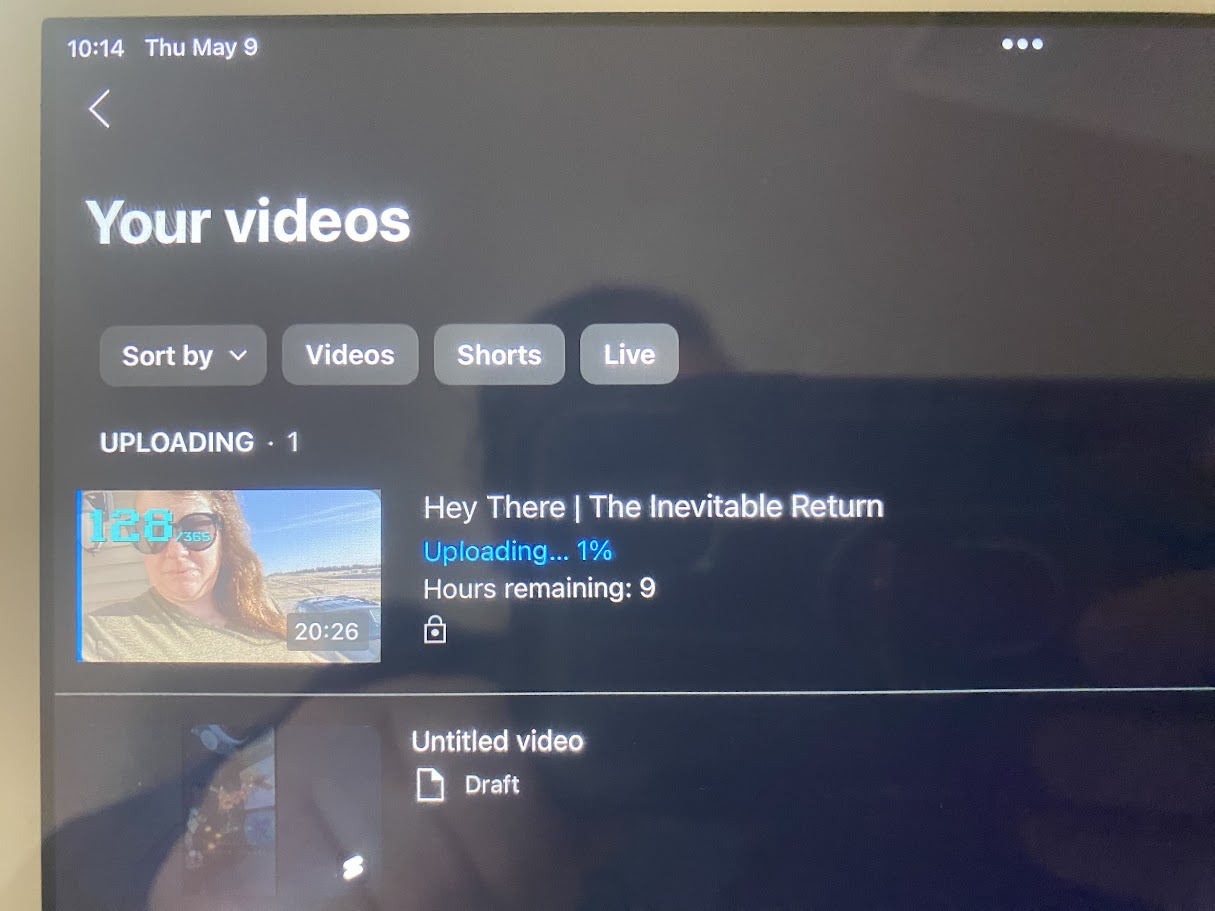
This post was going to be a bit of an apology for not posting yesterday, but after a phone call with a collogue I have a bit of advice to heed “never apologize”.

To clarify – the intention of yesterday’s post was to be the announcement that my video finally uploaded to YouTube, but, as it turns out, the last little stretch has still taken 48 hours. I get a bit annoyed with that, but I digress…

Let’s dive into this apology thing a little bit.

In a world where conformity often masks the true essence of individuality, the notion of refraining from apologies can be a radical act of self-affirmation. It’s about reclaiming the narrative of our lives and refusing to diminish our authenticity through unnecessary self-deprecation. While the concept of never apologizing may seem confrontational, it is, at its core, a declaration of self-worth and a commitment to honoring one’s truth.

Apologizing, in many contexts, has been ingrained as a societal expectation—a reflexive response to avoid conflict or maintain harmony. However, this ingrained habit often comes at the cost of our authenticity. How many times have we apologized for expressing our opinions, pursuing our passions, or simply being who we are? Each apology chips away at the foundation of our self-esteem, reinforcing the notion that our true selves are somehow flawed or unworthy.

By embracing the concept of never apologizing, we liberate ourselves from the shackles of societal judgment and self-doubt. It’s about unapologetically owning our beliefs, desires, and boundaries, without seeking validation or approval from others. In doing so, we reclaim our power and assert our right to exist authentically in a world that often demands conformity.

Moreover, refraining from apologies allows us to set boundaries and prioritize our well-being without guilt or hesitation. How often do we apologize for saying no, asserting our needs, or simply taking up space? By rejecting the need for constant validation, we cultivate a deeper sense of self-respect and self-love, honoring our inherent worthiness regardless of external validation.

Furthermore, the concept of never apologizing is not about absolving oneself of accountability or refusing to acknowledge mistakes. Rather, it’s about reframing apologies as acts of self-betrayal—a betrayal of our true selves in service of societal expectations. It’s about discerning when apologies are genuine expressions of remorse and when they are merely attempts to placate others at the expense of our authenticity.

In embracing this mindset, we create space for radical self-acceptance and self-empowerment. We reject the notion that our worthiness is contingent upon meeting arbitrary standards or conforming to societal norms. Instead, we celebrate our uniqueness, honoring the diverse tapestry of human experience without apology or explanation.

The concept of never apologizing is not a rejection of accountability but rather a celebration of authenticity. It’s about reclaiming our right to exist unapologetically and honoring the truth of who we are, without diminishing our worthiness for the sake of conformity. So, let us embrace the power of authenticity and liberate ourselves from the burden of unnecessary apologies, for in doing so, we pave the way for a more inclusive, compassionate, and authentic world. That being said – I am not advocating for not apologizing when it is earned or necessary. I am saying that apologizing for things you have no control over (you know who you are) or small, trivial things, or things that make you intrinsically you are does you no good and teaches the other person that you do not deserve respect.

Just some food for thought.

xoxo
-S

Embracing the Complexity: Navigating the Multifaceted Personality

Navigating Self-Doubt and Psychological Concerns

So, you’re someone with all these interests – art, science, sports, music – you name it, you’re into it. Now, fitting all of that into one neat little box? Yeah, not happening. It’s like trying to force a square peg into a round hole. Frustrating, right?

Here’s the thing, with all these diverse passions, it’s easy to feel a bit lost at times. You might start questioning yourself – are you just scatterbrained, or maybe there’s something more going on? It’s like you’re trying to solve a puzzle with half the pieces missing, and trust me, it’s stressful.

Then there’s society, always trying to slap labels on everything. So, when you don’t fit neatly into one of their boxes, it’s like you’re constantly swimming against the current. Exhausting? Oh, absolutely.

Having a bunch of different interests doesn’t mean you’re broken. Nope, not at all. Psychologists actually encourage embracing your complexity. It’s what makes you, well, you! Instead of trying to cram yourself into a box, why not celebrate your uniqueness? You’re like a one-person variety show, and that’s pretty darn cool.

It’s okay to feel a little lost sometimes. We all do. But you don’t have to go it alone. Reach out to your friends, your family, or even a professional if you need to. Talking about what you’re going through can be a game-changer. Trust me, there’s strength in numbers.

Reframing Perspectives and Seeking Support

Now, let’s flip the script here. Instead of seeing your diverse interests as a burden, why not embrace them as a superpower? (And this is advice even I need to start taking…) Seriously, think about it. You’ve got this whole arsenal of skills and passions at your disposal. That’s pretty powerful stuff.

Sure, navigating life with a multifaceted personality can be tricky. But it’s also what makes you so dang awesome. You’re not just a one-trick pony—you’re a whole circus! So, the next time you’re feeling overwhelmed by all your interests, just remember: you’re not alone, and you’re definitely not broken. You’re just beautifully complex, and that’s something to celebrate.

If you ever need a reminder of just how awesome you are, just reach out. Whether it’s a friend’s pep talk or a session with a therapist, there’s no shame in asking for help. We’re all in this together, after all. You could even comment below! I really would like this community to be a place of strength and support, and let’s face it, if you follow me, you’re down or the chaos.

Embracing Complexity as a Source of Strength

Alright, let’s wrap this up with a big ol’ bow. Embracing your complexity isn’t just about surviving—it’s about thriving. It’s about owning every quirky, unique part of yourself and shouting it from the rooftops.

So, the next time life throws you a curveball, don’t sweat it. You’ve got this. With your diverse interests and unwavering resilience, there’s nothing you can’t handle. You’re a force to be reckoned with, my friend. So go out there and show the world what you’re made of. You’ve got this!

xoxo
-S