
Cindi Estrada Has Her Name Back

Wyoming Cold Case Solved After 33 Years

After 33 years, I-90 Jane Doe has been identified as Cindi Arleen Estrada. This in-depth true crime post explores her life, the Wyoming cold case, the arrest of Clark Perry Baldwin, and how forensic genealogy finally gave her name back.

In the spring of 1992, a Wyoming road crew working near Interstate 90 outside Sheridan discovered the body of a young woman in a drainage ditch. She had no identification, no known connection to the state, and no vehicle nearby. No one had reported her missing. Investigators had no clear path to her past and no one to speak for her.

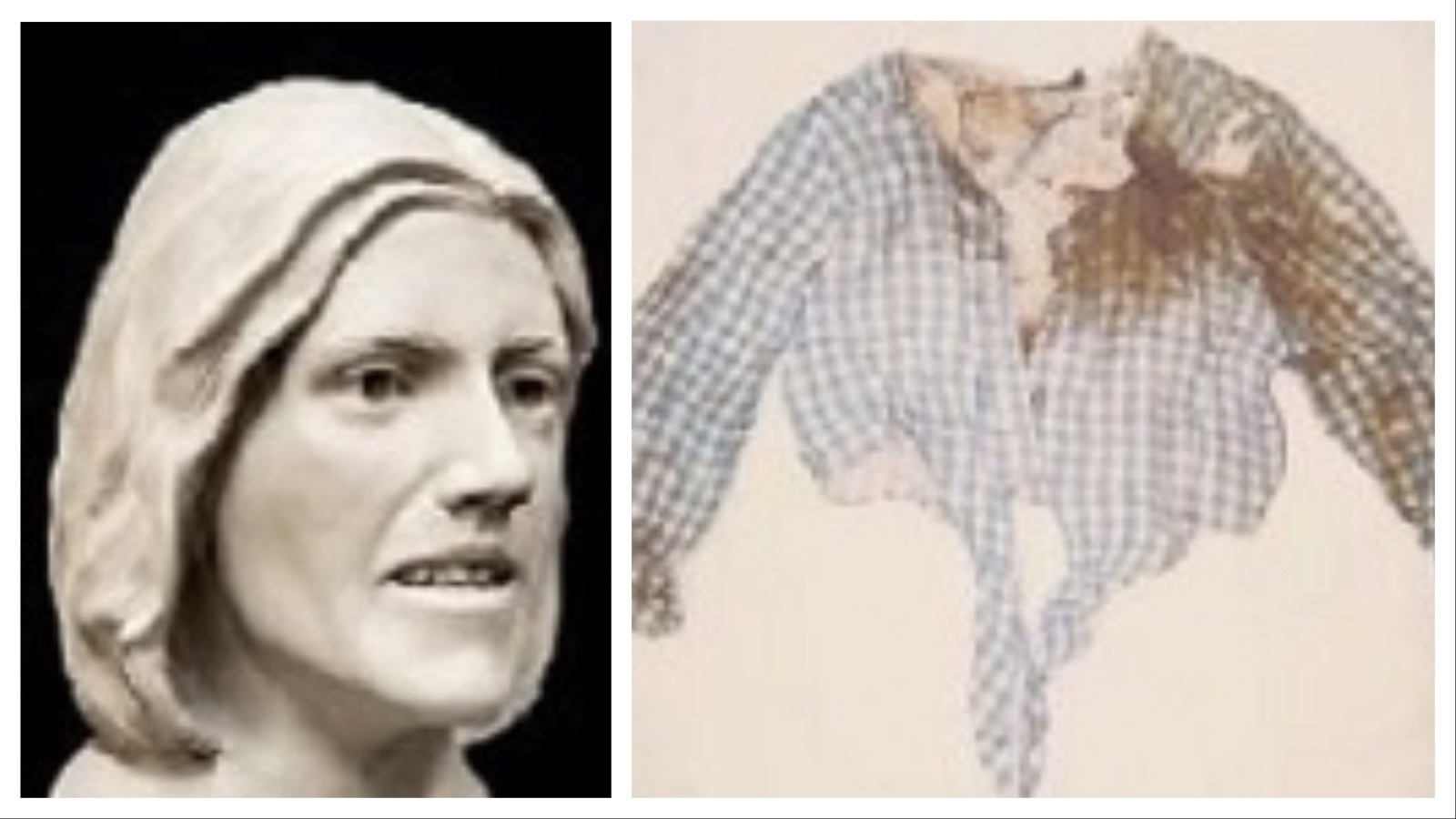
She was entered into case files as I-90 Jane Doe, her face reconstructed through clay models and later in digital renderings. For decades, she remained one of thousands of unnamed victims in cold case databases.

After thirty-three years, she finally has her name back. She was Cindi Arleen Estrada, a 21-year-old woman from Torrance, California. She had a history, a family, and a life before Wyoming. Now, that story can be told.

She Was Not Forgotten

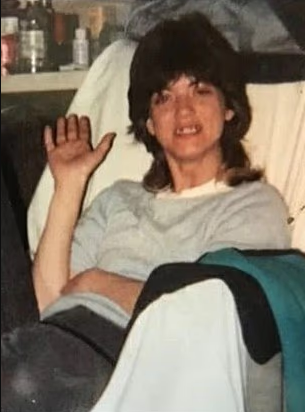
Cindi was born in Southern California in 1971. She had long brown hair, wide-set eyes, and a softness in her expression that survived even in the few photographs that remain. She grew up in the neighborhoods south of Los Angeles, surrounded by the noise and energy of city life.

Her early years were not without hardship. She spent time apart from her biological family, later reconnecting with them. Friends and relatives recall a young woman navigating her twenties with resilience and a search for belonging.

By 1992, she was in Torrance, keeping in touch with family intermittently. She was young, looking for stability, and trying to shape a life that felt like her own. Then, she disappeared.

Two Wyoming Jane Does, One Killer

On April 8, 1992, Cindi’s body was found near Interstate 90. A month earlier, on March 1, another woman was discovered near Bitter Creek, close to Rock Springs. This woman was also unidentified and became known as Bitter Creek Betty, later confirmed to be Irene Garcia Vasquez.

Both women were found nude, left near major highways in Wyoming, and murdered in similar ways. Neither had identification, and neither was connected to the state by residence or work. For years, the two murders remained separate cold cases with no clear suspect.

How DNA Connected the Cases

Advancements in forensic science changed everything. Evidence from both women was re-examined, and the DNA profiles matched the same man. That man was Clark Perry Baldwin, a former long-haul truck driver with a history of violence against women and a connection to other murders in multiple states.

Baldwin had been investigated in the early 1990s for assault but evaded serious charges. His work as a truck driver gave him access to isolated locations and allowed him to move freely across state lines. This mobility let him hide in plain sight, targeting women who were vulnerable or traveling alone.

In 2020, Baldwin was arrested. He was convicted in Tennessee for another murder and now faces extradition to Wyoming to stand trial for the murders of Cindi Estrada and Irene Garcia Vasquez.

Forensic Genealogy Gives Cindi Her Name

Even after Baldwin’s arrest, I-90 Jane Doe remained unnamed. That changed when investigators turned to forensic genealogy. By uploading her DNA profile to public ancestry databases, they identified distant relatives and began building a family tree.

Eventually, this led to her biological mother, who provided the confirmation investigators needed. After decades of uncertainty, Cindi’s mother finally knew what had happened to her daughter.

What We Know About Her Final Days

Cindi had no known reason to be in Wyoming. She may have been hitchhiking, traveling to meet someone, or simply trying to get to another city when she crossed paths with Baldwin. His pattern shows he exploited the trust of women who were traveling, isolating them before committing the crime.

It is believed she was killed elsewhere and her body was left near Sheridan, far from her home and those who knew her. Her life was stolen, her name erased, and her case left unsolved for over three decades.

A Second Name Returned

With Cindi’s identity confirmed, prosecutors can now move forward with charging Baldwin for her murder and for the murder of Irene Garcia Vasquez. Both women have their names restored. Both cases are active again.

These women are not just cold case statistics. They are part of Wyoming’s history, and their stories will now be told in court.

Why Cindi’s Story Matters

Cold cases often fade from public attention, but each one represents a person with a full life, dreams, and loved ones left behind. Cindi’s identification is the result of persistence, improved technology, and the refusal of her family and investigators to give up.

She was never just a body found along the highway. She was a daughter. She was loved. And now, she is remembered by name.

Her name is Cindi Arleen Estrada. She was 21 years old. She mattered in life, and she matters now.

xoxo
-S

As an amateur true crime writer, I strive to provide accurate and well-researched information. However, please be aware that I am not a professional investigator or journalist, and my work is based on available sources and my understanding of the case. There may be inaccuracies or incomplete details in my posts. I encourage readers to seek out additional sources and verify information from official and professional channels. Thank you for your understanding and support.
The Fugitive Who Vanished

The 42-Year Hunt for Stephen Craig Campbell

Some crimes don’t just shake a community; they get under its skin, burrowing deep into the town’s collective memory. For the people of Rock Springs, Wyoming, August 23, 1982, was one of those nights. A seemingly normal evening was shattered by a violent explosion that left lasting scars, not just on the victims but on an entire town that had to live with the knowledge that the man responsible had slipped away.

A Bomb, A Betrayal, and A Vanishing Act

It started with a red metal toolbox, sitting outside a modest home like it had every right to be there. Except this one wasn’t filled with tools. It was packed with explosives. The woman who opened it, Stephen Craig Campbell’s ex-wife, had no idea what she was walking into. She wasn’t even the intended target, but that didn’t matter when the blast ripped through her hand, severing a finger and sending shrapnel tearing through the house. Fire swallowed the structure and the one next to it, leaving nothing but wreckage in its wake.

Her boyfriend, the one Campbell had been aiming for, was unharmed. But lives had already been altered forever.

Investigators barely had to connect the dots. Campbell had a history of anger, and he had been stewing ever since his marriage fell apart. He was arrested almost immediately, facing attempted first-degree murder charges. With the evidence stacked against him, it should have been an open-and-shut case. But Campbell had other plans.

Houdini in an Orange Jumpsuit

After posting bail in early 1983, Campbell did what no one expected. He disappeared. Vanished. No digital footprint, no trace, no whispers about his whereabouts. It was like he had ceased to exist.

And for decades, that’s exactly what it seemed like. The case went cold, investigators hit dead ends, and Campbell’s mugshot just gathered dust on most-wanted lists.

But here’s the thing about ghosts. Sometimes, they leave fingerprints.

The Man Who Wasn’t There

It took years, but eventually, someone noticed that Campbell had done more than just go into hiding. He had stolen an entire life. His new identity belonged to Walter Lee Coffman, a man who had died in a motorcycle accident in 1975. Campbell had taken his name, his Social Security number, and anything else that would make him look like an average citizen.

For decades, he lived as Coffman, keeping his head down in the mountains of Weed, New Mexico. He owned land, paid taxes, and even collected government benefits. Because what’s a little fraud when you’ve already dodged a murder charge?

Detectives tried over and over to track him, but Campbell had buried himself deep. Every time someone thought they had a lead, he slipped away again.

The Mistake That Cost Him Everything

For a guy who had been so careful for 42 years, you’d think he would have kept his paperwork in order. But Campbell got sloppy. When he tried to renew his identification, inconsistencies popped up. And here’s where things get ironic. New government policies aimed at cracking down on fraud flagged his application. The same system he had gamed for decades was the very thing that unraveled his lies.

Federal agents dug in, and it didn’t take long before the pieces came together. The man living as Walter Lee Coffman was actually Stephen Craig Campbell, the fugitive they had spent decades hunting.

On February 19, 2025, a team of FBI agents, U.S. Marshals, and Social Security investigators arrived at his compound with a simple message: Game over.

The Wannabe Doomsday Warrior

But Campbell wasn’t planning to go quietly. He grabbed a high-powered rifle, took up a concealed position, and prepared for what he probably thought would be his last stand. Remind you of anyone? I’m looking at you, David Koresh. But instead of going out in a fiery blaze of defiance, Campbell was met with flashbangs and tactical precision. Law enforcement gave him a chance to surrender, and whether he realized he was outmatched or just didn’t have the stomach for a shootout, he finally gave up.

No bullets fired. No dramatic ending. Just a 76-year-old man, caught in the lie he had built his life around.

What They Found in His Hideout

Turns out, Campbell had spent the last 40 years stockpiling for something. Whether it was survival, a showdown, or paranoia-fueled prepping, no one knows for sure. What we do know is that officers found 57 firearms and thousands of rounds of ammunition on his property. The man was ready for a fight. He just didn’t get one.

Sweetwater County Sheriff’s Office spokesperson Jason Mower put it bluntly: “Campbell’s wanted poster has been on the wall at our office since I started here nearly 20 years ago. Every lead went cold, no matter what tools we used. Now, I finally understand why.”

What Happens Next

Now, Campbell is sitting in a New Mexico jail, facing identity fraud and passport misuse charges. If convicted, he could get up to 10 years in federal prison before Wyoming finally gets its turn with him. The Sweetwater County Sheriff’s Office has already made it clear they’re waiting.

For Campbell’s victims, his arrest doesn’t undo what happened, but at least it means he’ll finally answer for it. His ex-wife, now decades removed from the explosion that nearly killed her, will see him in court.

Sheriff John Grossnickle summed it up best: “This is one of the most significant and dramatic fugitive cases in Wyoming law enforcement history. No matter how much time passes, justice remains the priority.”

Stay Tuned for More True Crime Cases

Campbell thought he could outrun justice forever, but time caught up with him. And he’s not the only one. Just this month, another Wyoming man carried out a brutal, premeditated attack on his ex-wife. This time, it was with a shotgun instead of a bomb. A different weapon, a different decade, but the same horrifying theme: men who believe they have the right to destroy the lives of women who move on without them.

Next week, we’ll break down that case, another terrifying example of a man who refused to let go and chose violence instead of facing his own failures. Campbell managed to evade justice for 40 years, but next week’s subject met a different fate. One where consequences arrived much sooner. The question remains: why does this kind of violence against women continue, and what will it take for the system to catch up? This case may not span decades like Campbell’s, but it still forces us to confront uncomfortable truths about violence, accountability, and the justice system’s response.

Stay tuned for another wild Wyoming crime story.

xoxo
-S

As an amateur true crime writer, I strive to provide accurate and well-researched information. However, please be aware that I am not a professional investigator or journalist, and my work is based on available sources and my understanding of the case. There may be inaccuracies or incomplete details in my posts. I encourage readers to seek out additional sources and verify information from official and professional channels. Thank you for your understanding and support.